Why hardness survives treatment
City of Belen water starts in wells on the west side of town near I-25. Every public supplier treats for what's regulated, and in Belen that now includes a dedicated arsenic plant. Calcium and magnesium sit outside those rules entirely. They're harmless to drink, which is exactly why they're left in, and they're the minerals behind the white ring on your sink and the scale inside your water heater.
Regional groundwater commonly tests hard, but each home is a little different, so we never quote a number before we've tested. Your results will show where your water lands, and that reading sets the size of the resin bed and how often the metered valve regenerates.
The limits of a softener
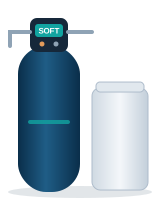
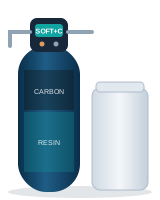
Ion exchange removes hardness and can handle small amounts of iron. It does not remove arsenic, nitrate, chlorine or bacteria. For those, you'd look at kitchen-sink RO, carbon filtration, or, for bacteria in a well, disinfection after a lab test.
On the test sheet
The on-site test takes about fifteen minutes and checks hardness, total dissolved solids, pH, chlorine, iron, manganese and sulfur. Iron matters most on private wells around the edges of Belen; it can stain fixtures orange and, at higher levels, needs more than a softener. If you're on a well, we'll also help you get lab testing for bacteria, nitrate and arsenic.